

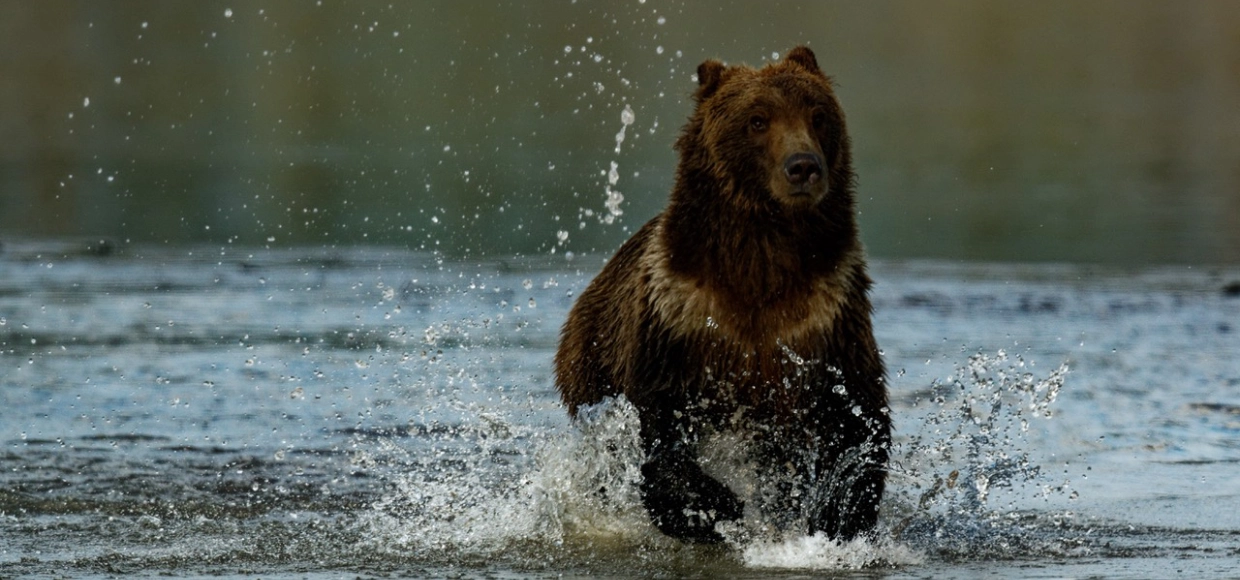
Bear Viewing Tours from Homer, Alaska
Our tours depart near Homer, launching at Anchor Point just 38 miles from Lake Clark, which means no costly fly-in. You’ll cross Cook Inlet by boat (about 2 hours each way), spotting whales, otters and volcanoes, then watch brown bears up close at Chinitna Bay. The boat trip costs less than a floatplane and gives far better photos.
Homer, Alaska is one of the most popular jump off points for bear viewing in the entire state, and it’s one that most visitors overlook when they head straight to Katmai or Brooks Falls. From our Anchor Point launch, just a few miles north of Homer, of Homer, we cross Cook Inlet by boat to Chinitna Bay for bear viewing in Lake Clark National Park, where it’s common to see 12 to 40 brown bears in a single day. No floatplane required. No lottery system. No crowds.
If you’re looking for the best bear viewing Alaska has to offer at a price that doesn’t require a second mortgage, Homer is where your trip starts — and we’ve been running these tours for over 25 years.
Why Homer Is the Best Base for Alaska Bear Viewing
Homer sits at the end of the Sterling Highway on the Kenai Peninsula, right on the shore of Kachemak Bay. Our launch point at Anchor Point is about a 15-minute drive north of Homer. It is a straightforward trip with no charter flights, no complicated logistics, and no surprise fees.
What makes the Homer route genuinely different from fly-in alternatives is what happens on the water. The Cook Inlet crossing to Chinitna Bay runs through one of the most productive marine environments in Alaska. On the way out and back, it’s common to spot humpback whales, orca pods, Steller sea lions, sea otters, puffins, and a range of seabirds. No fly-in tour can offer that. You’re wildlife watching from the moment you leave the dock.
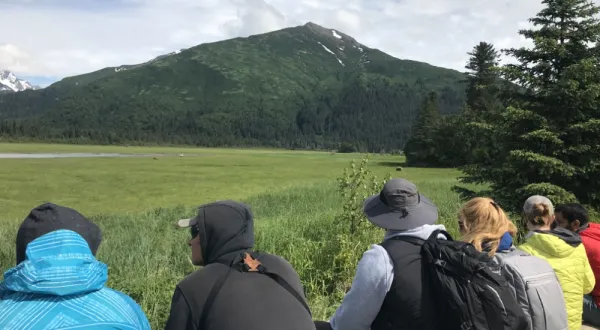
Once you arrive at Chinitna Bay, you’re in a remote corner of Lake Clark National Park that has no road access. The only way in is by boat or floatplane. That keeps the crowds out and the experience personal. You won’t be sharing the shoreline with bus tours or large groups.
Homer is also a destination worth spending time in before or after your tour. The Homer Spit, world-class halibut fishing, Kachemak Bay State Park, and the local galleries and restaurants make it an easy place to build a trip around.
Our Homer Bear Viewing Tours — What to Expect
Here’s exactly what a full day bear viewing tour from Homer looks like:
Departure
7:00am from Anchor River Enterprises, 74294 Anchor Point Rd, Anchor Point, AK 99556. Approximately 15 minutes north of Homer. Directions provided at booking.
Duration
8 to 10 hours total, including travel time across Cook Inlet and time on shore at Chinitna Bay.
Group Size
Maximum 6 guests per trip. This is a small-group, personal experience. Not a commercial tour boat with 40 strangers.
What You’ll See
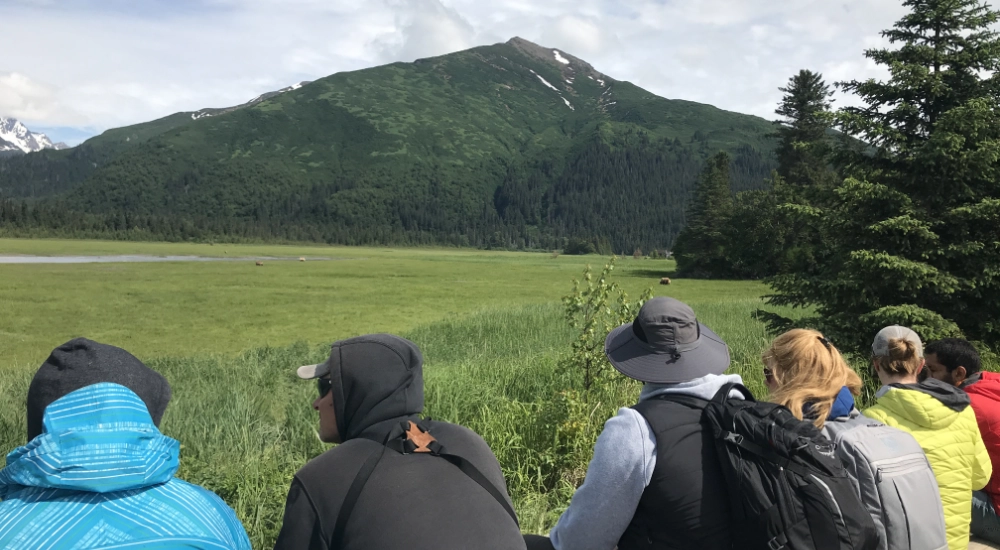
Brown bears foraging on coastal sedge grass, fishing for salmon, and moving through the meadows and shoreline at Chinitna Bay. Family groups with cubs are common in June and July. Salmon fishing behavior peaks from late July through September. Marine wildlife like whales, sea otters, and puffins are on the Cook Inlet crossing both ways.
What’s Included
Boat transportation, expert guiding by Captain Mike Patterson, and National Park Service permit access to Lake Clark National Park. Everything you need for the day is covered.
Price
$675 per person + tax. 2-person minimum. No hidden fees.
Ready to book? Check availability and pricing
The Destination — Chinitna Bay, Lake Clark National Park
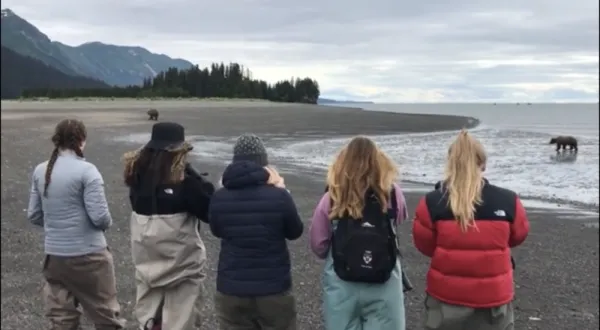
The bay draws bears because of the combination of rich coastal sedge meadows in early summer and salmon-filled streams later in the season. It’s that reliable year-round food supply that produces the concentrations we see on every trip. Bear viewing at Chinitna Bay also comes with scenery that’s hard to describe on a page. Mount Redoubt and Mount Iliamna, two active volcanoes in the Ring of Fire, frame the western horizon across the Inlet. On a clear day, the backdrop to every bear sighting looks like a painting.
Boat access from Homer makes Chinitna Bay the most affordable entry point to this level of bear viewing. Fly-in alternatives to Katmai and Brooks Falls routinely add $600 to $900 per person in floatplane costs before a single guiding fee is charged. Our tours cover everything from Anchor Point for $675 per person.
Best Time to Visit Homer for Bear Viewing
Our tours run June through September. Here’s what each part of the season looks like:
June — July:
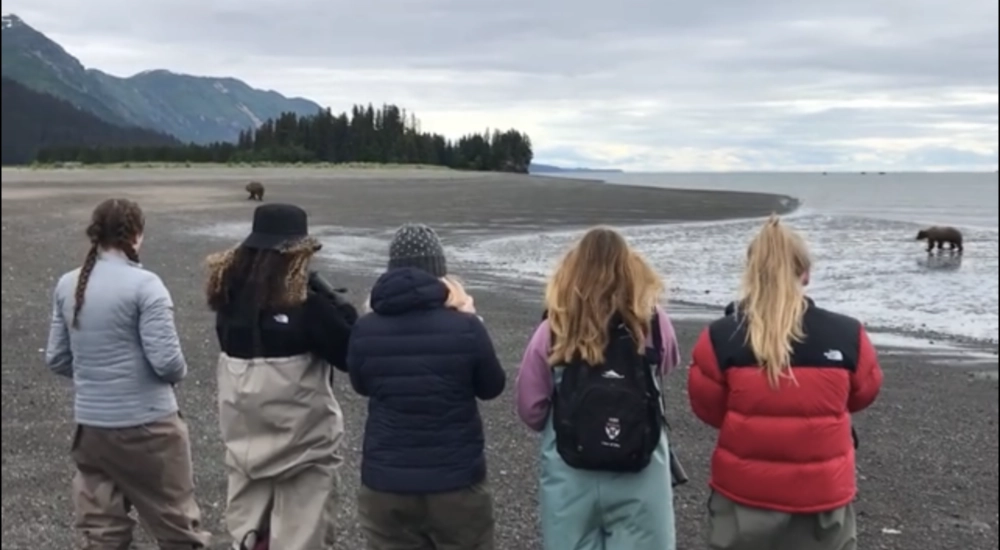
Early season. Bears emerge from their dens lean and hungry, and head straight for the coastal sedge meadows. This is the best time of year to see sow-and-cub family groups, cubs born in January are small, playful, and constantly moving. The meadow setting gives you wide-open views with no obstruction.
July — August:
Salmon runs begin. Bears shift to the streams and the shoreline, and the activity level on a typical trip goes up noticeably. Fishing behavior, sparring between males competing for prime spots, and the constant movement of animals between feeding locations makes this peak season for photography.
September:
Pre-hibernation. Bears are at their largest, some coastal males are pushing 800 to 900 pounds at this stage, and they’re moving almost constantly to build fat reserves before denning. It’s one of the most dynamic months of the season, and group sizes tend to be smaller since the summer rush has passed.
All three months are excellent. If you have flexibility, July and August offer the highest bear activity. Book early because trips fill up quickly at 6 guests maximum.
About Your Guide — Captain Mike Patterson
Captain Mike Patterson has been running bear viewing tours on Cook Inlet for over 25 years. He’s a fourth-generation Alaskan who grew up on the Kenai Peninsula, holds a USCG 100-Ton Masters License, and operates under a National Park Service permit for Lake Clark National Park, one of a limited number of operators authorized to guide visitors into the park.
Every trip is led personally by Captain Mike. We don’t hand groups off to other guides or subcontract tours during busy season. When you book with us, you get Captain Mike on the water with you for the entire day.
Average bear sightings per trip: 12 to 40 animals.
Want to understand exactly what happens from dock to shore and back? Check out how our bear viewing tours work
Book Your Homer, Alaska Bear Viewing Tour
Questions? Call or text Captain Mike directly:
907-885-7000 | Toll free: 1-800-478-9190 | After hours text: 907-885-7270
Directions To Where To Meet Us In Anchor Point
From Land’s End Resort
(Approx. 30–35 Minutes)
To get to Anchor River Enterprises from Land’s End, you’ll start by driving all the way down the Homer Spit Road. Enjoy the ocean views as you head toward town, and once you reach the end of the Spit, follow the road as it curves and becomes Sterling Highway. You’re going to stay on the highway for about 20 miles, heading out of Homer and through the hills. When you get into Anchor Point, look for the turn onto Anchor Point Road near the river. Follow that road for a short bit, and you’ll find the destination on your right.
—
From The Homer Airport
(Approx. 20–25 Minutes)
Starting from the Homer Airport, head out onto Heath Street and make your way toward the main part of town. You’ll want to turn onto the Sterling Highway, it’s the main road heading north out of town. Keep driving for about 15 to 20 minutes as you pass through the scenic Diamond Ridge area. Once you descend into the Anchor Point valley, keep an eye out for Anchor Point Road. Take that turn, and just follow it down until you arrive at the enterprise.
—
From Homer Carr’s / Safeway
(Approx. 20 Minutes)
If you’re leaving from Carr’s, it’s a very simple trip. Just pull out of the parking lot and get right onto the Sterling Highway heading north. You’ll be on this road for the bulk of the drive, which is about 15 miles. You’ll pass the scenic overlook at the top of the hill and head down toward the coast. When you enter Anchor Point, look for Anchor Point Road on your left. Turn there and follow it a short distance until you reach your destination.
—
From the Baycrest KOA
(Approx. 15 Minutes)
Since you’re already at the Baycrest KOA, you have a great head start! Just pull out onto the Sterling Highway and head north, away from Homer. You’ll enjoy a nice drive down the long hill and through the wooded areas for about 12 miles. As you get into the heart of Anchor Point, you’ll see the turn for Anchor Point Road. Head down that road for about a minute, and you will see the destination right there.