

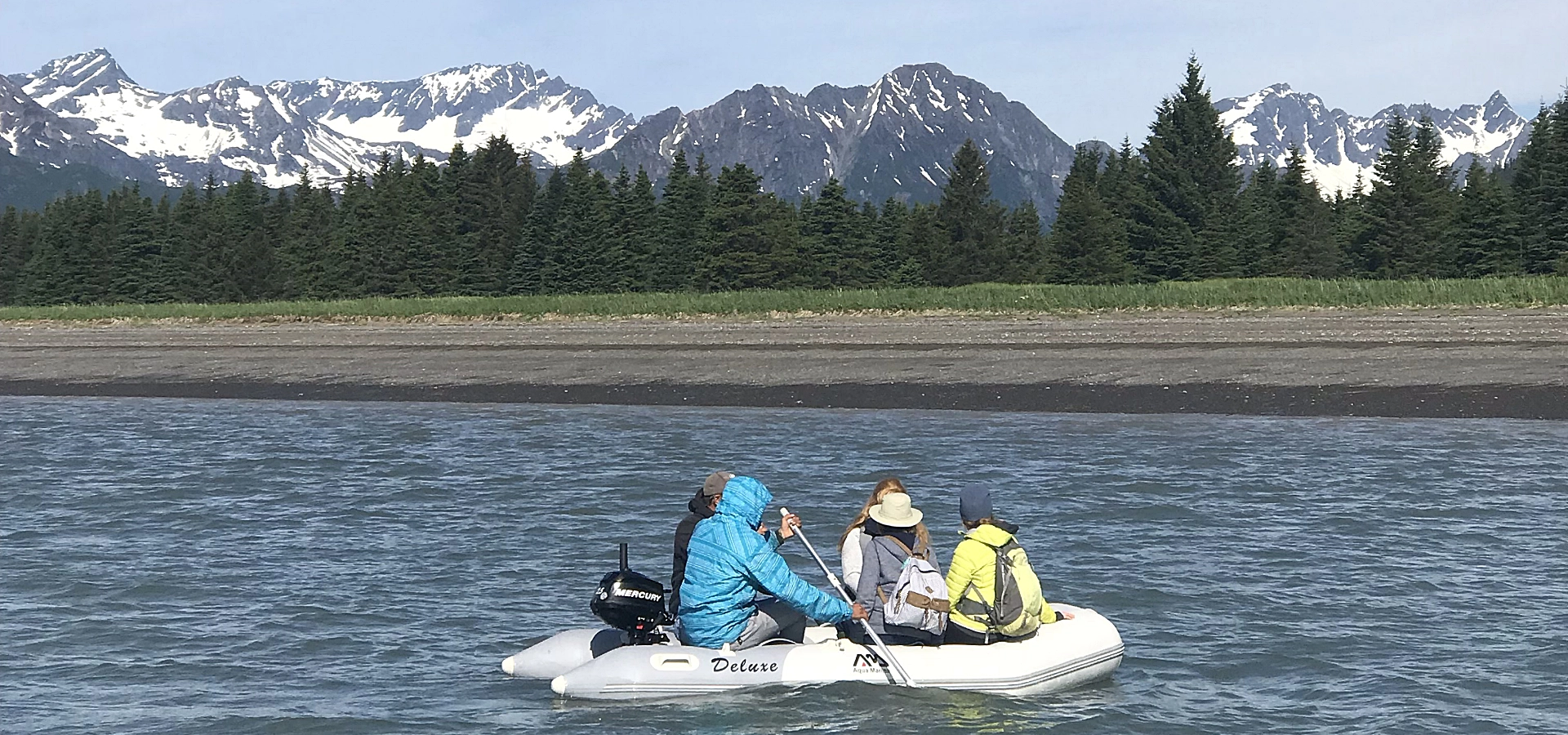
Bear Viewing in Lake Clark National Park
Lake Clark National Park covers four million acres of Alaska wilderness and there are no roads to it. The park’s Chinitna Bay coastline on the western shore of Cook Inlet is where we take our tours and it’s one of the most reliable brown bear viewing locations in the state, with sightings that average 12 to 40 animals per trip throughout the June to September season.
We access the park by boat from Anchor Point, just north of Homer. That makes us part of a small group of Homer Alaska bear tours that reach Lake Clark by water rather than by floatplane, and it’s the reason our pricing is $675 per person all-inclusive, while comparable fly-in destinations add $600 to $900 per person in charter costs before guide fees begin. Our Homer, Alaska bear viewing tours leave from Anchor Point, just north of Homer, and take you directly to Chinitna Bay, right inside the park boundary, no flight required.
Why Lake Clark Over Katmai or Brooks Falls
Katmai’s Brooks Falls is the most photographed bear viewing spot in North America. It’s also subject to a permit lottery for the elevated viewing platforms during peak season, and it requires a floatplane to get there from Anchorage or Homer. Kodiak bear viewing has similar access constraints. Both are exceptional destinations, but the logistics and cost stack up quickly.
Lake Clark National Park protects the same type of coastal habitat, sedge meadows, salmon streams, undeveloped coastline, but without the infrastructure that comes with a famous destination. The bears at Chinitna Bay have not been habituated to crowds on viewing platforms. They move through the meadows and streams on their own schedule, and the limited number of permitted operators keeps the experience from turning into a spectacle.
Captain Mike Patterson has held a National Park Service permit for Lake Clark for over 25 years. Permits are limited. On most days at Chinitna Bay you will only see a few groups.
The Destinations — Where Our Tours Go
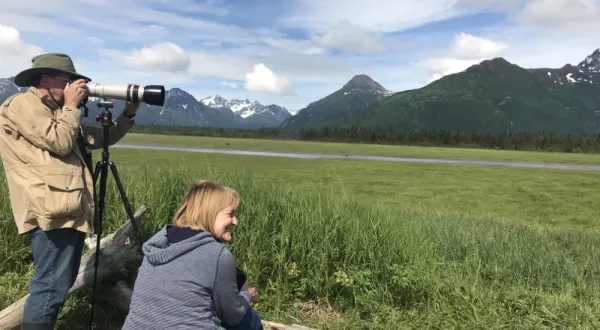
Our primary viewing area. Chinitna Bay is a broad coastal inlet on the western shore of Cook Inlet, roughly 90 minutes by boat from Anchor Point. The bay has two distinct environments that bears use at different points in the season. Open coastal sedge meadows that stretch back from the water’s edge, and salmon streams that run through the lower meadows toward the Inlet.
The combination of open terrain and consistent bear activity is what makes this location work for viewing. You are not watching bears from a platform over a narrow falls. You are on the shoreline, at water level, with animals moving freely in front of you. Learn more about bear viewing at Chinitna Bay
Cook Inlet Wildlife Corridor
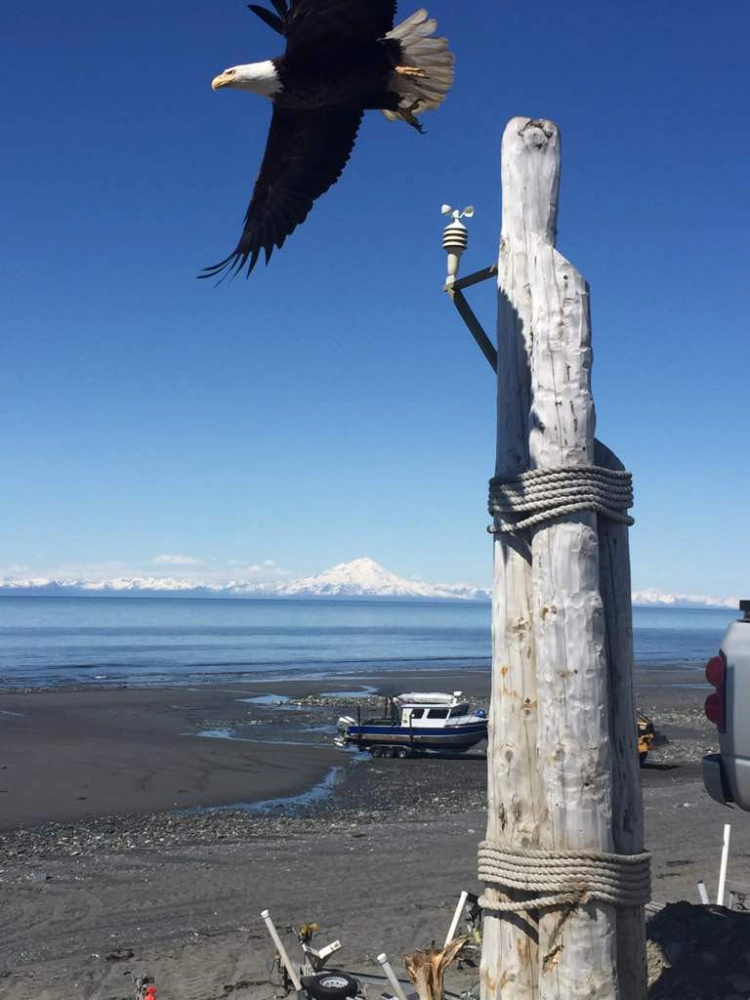
The 90-minute transit across Cook Inlet is part of the trip, not just travel time. Cook Inlet runs between the Kenai Peninsula and the Alaska Range volcanoes, and the marine traffic through that corridor includes humpback whales, orca pods, Steller sea lions, sea otters, Dall’s porpoise, and a range of seabirds including tufted and horned puffins. On most crossings Captain Mike stops the boat when something surfaces. No floatplane covers this ground.
Getting There — Departure and Logistics
Departure is at 7:00am from Anchor River Enterprises, 74294 Anchor Point Rd, Anchor Point, AK 99556 — approximately 15 minutes north of Homer. Full driving directions are provided at booking.
The full day runs 8 to 10 hours from dock to dock, including the Cook Inlet crossing each way and time on shore at Chinitna Bay. Groups are capped at 6 guests. Every trip is led personally by Captain Mike. We do not subcontract or hand groups off to other guides during busy season.
What’s included: boat transportation, fuel, NPS permit access to Lake Clark National Park, and Captain Mike’s guiding for the full day. Bring your own food, water, and camera gear. $675 per person plus tax, 2-person minimum.
What the Tour Looks Like by Season
The question we get most often is when to book. The honest answer is that any month from June through September produces strong sightings. What changes is the setting and the type of behavior you watch.
June — July:
In early season the bears are in the meadows. Sedge grass is the primary food source at this point, and large areas of open coastline hold multiple animals at once — sometimes a dozen or more visible without moving from a single spot. This is when sow-and-cub groups are most active and most visible. The cubs are four to five months old in June, still small enough that sows keep them close, and watching a family group work through the meadow in early morning light is the kind of thing people describe to other people for a long time afterward.
July — August:
When salmon begin running, the bears concentrate at the streams. The dynamic shifts from wide, open meadow viewing to watching specific animals at close range in and around moving water. Bears that were scattered across the sedge flats are suddenly stacked up at a handful of productive fishing spots. Adult males claim the best positions, subadults work the margins, and sows fish with cubs at their sides. This is peak season for photography because the activity level and the proximity to the animals is higher than at any other point in the year.
September:
Late season is quieter in terms of visitor volume, and the bears are noticeably larger than they were in June. By September a bear that weighed 500 pounds in spring may be carrying 650 to 700 pounds of fat-layered bulk. They’re also moving more purposefully. Spending less time resting and more time eating. Captain Mike has noted that September trips often produce some of the longest uninterrupted observation sequences of the season, because the bears are too focused on feeding to pay much attention to the group.
The Brown Bears of Lake Clark
The bears at Chinitna Bay are coastal brown bears, the same population that draw visitors to Katmai and McNeil River. What makes them specific to this location is the combination of terrain and limited human traffic that has produced animals with a predictable daily rhythm.
Captain Mike has watched the same bears at Chinitna Bay for over two decades. Individual animals are recognizable by size, scarring, and behavior. Sows bring cubs back to the same meadow sections year after year. The large males have established hierarchies at the salmon streams that play out the same way each summer. That accumulated observation is what guides where the group goes and how long they stay in a given spot.
For the biology behind what you’re watching: About Alaska brown bears
Book a Lake Clark Bear Viewing Tour
Full day trips run June through September from Anchor Point, north of Homer. $675 per person plus tax. 2-person minimum, 6 guests maximum. See all tour details and availability
Questions? Call or text Captain Mike directly:
907-885-7000 | Toll free: 1-800-478-9190 | After hours text: 907-885-7270