

Why Are Alaska Bear Viewing Tours Guided?
Why are Alaska bear viewing tours guided instead of open for independent travel? Wondering how our bear viewing tours work? The answer is simple. Alaska is true wilderness. Brown bears move freely across national park land, coastal bays, and salmon streams. There are no fences and no controlled enclosures. Guided tours exist to protect both guests and wildlife.
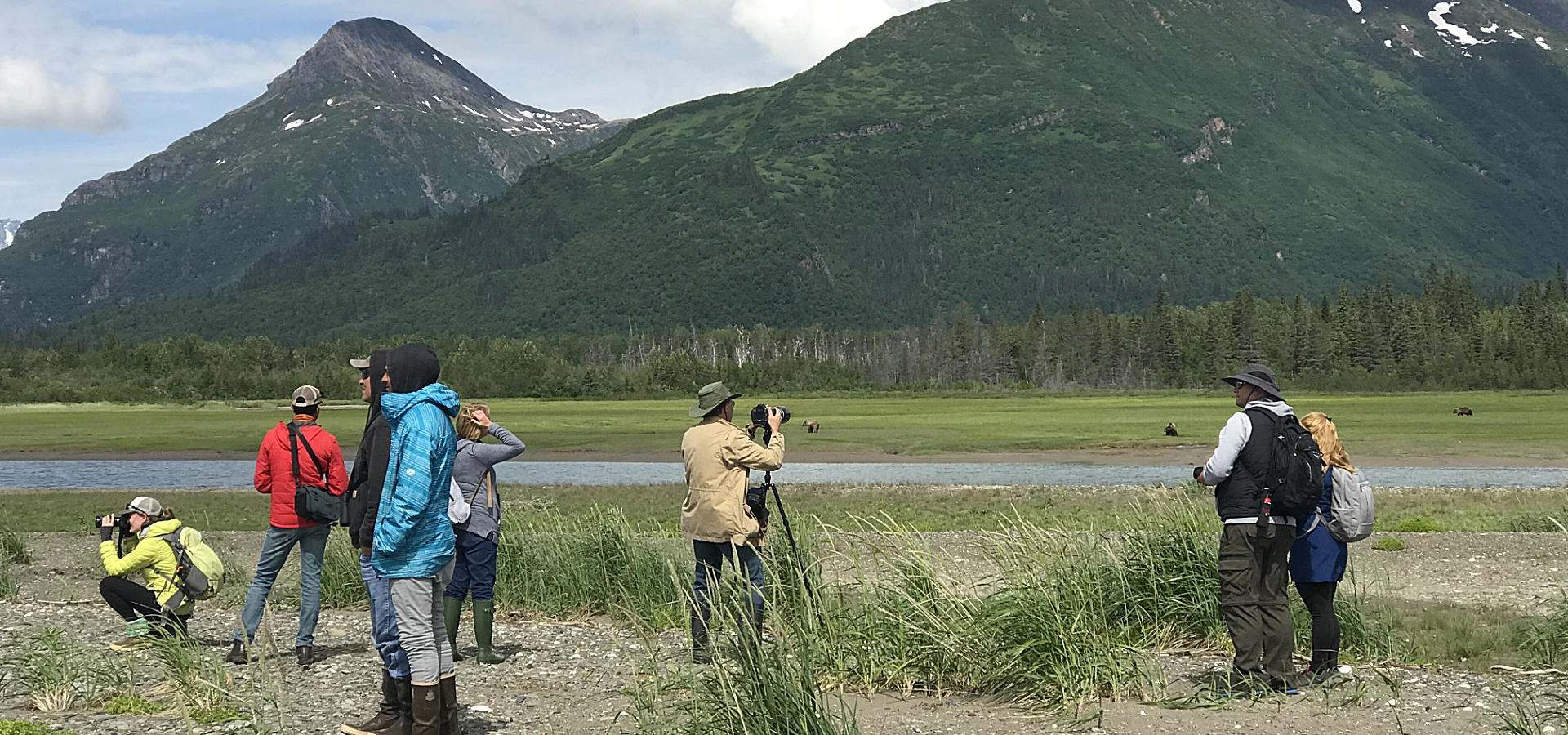
In places like Lake Clark National Park and Preserve, visitors travel by boat into remote coastal habitat. Once ashore, safety, positioning, and timing all matter. Professional guides manage these details so guests can focus on the experience.
Guided Alaska bear viewing tours are not about limiting freedom. They are about making sure the trip is safe, legal, and respectful of wild animals.
Safety in Bear Country
Safety is the most important reason tours are guided.
Brown bears in Alaska are powerful and unpredictable. They are not trained animals. They respond to food sources, tides, weather, and other bears.
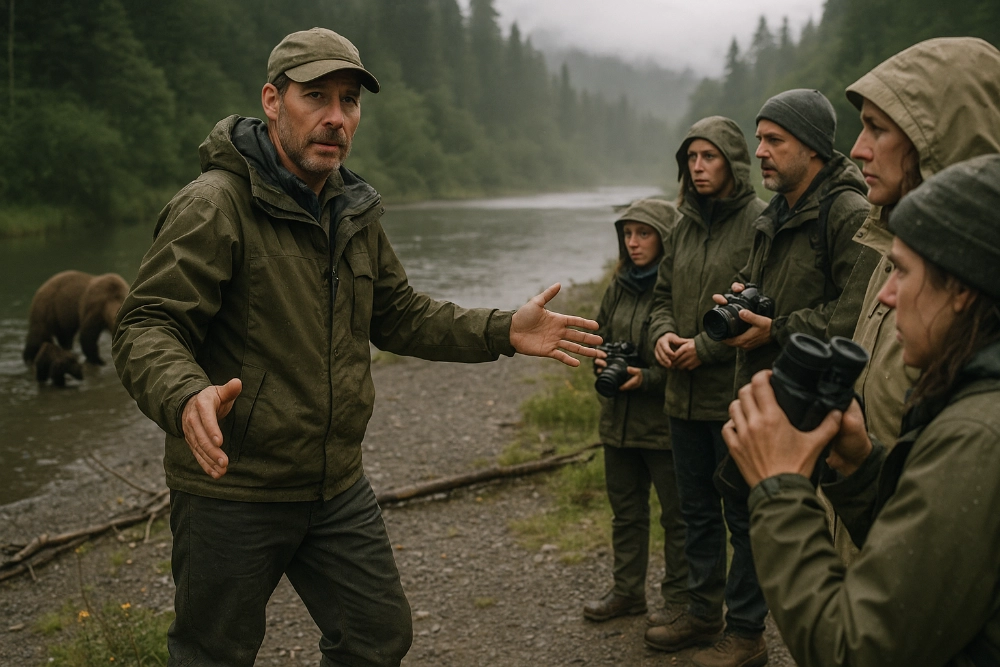
Professional guides are trained to:
• Read bear body language
• Maintain safe distance
• Keep groups organized
• Adjust positioning when needed
• Monitor wind direction and terrain
When walking along tidal flats in Chinitna Bay, guests may be several miles from the nearest road. In remote areas like this, prevention is critical.
Guides provide a clear safety briefing before leaving the boat. They explain how to stand, when to move, and how to stay grouped. If a bear changes direction, the guide calmly shifts the group. Without that leadership, inexperienced visitors could accidentally move into a feeding area or block a natural travel path.
In wilderness environments, expert oversight keeps everyone safe.
National Park Rules and Permit Requirements
Many of Alaska’s best bear viewing areas are inside protected national park land.
Lake Clark National Park, Katmai National Park, and locations like Pack Creek operate under federal regulations. These rules protect habitat and limit visitor numbers.
Guided operators manage:
• Required permits
• Visitor caps
• Seasonal access rules
• Wildlife viewing guidelines
In Lake Clark, there are no platforms for viewing the wildlife. Guides must position guests in open terrain while following park rules.
Permits often limit how many people can enter certain areas each day. Guided tours coordinate these permits in advance. Independent travel without proper permits can result in fines or denied access. Guided tours make sure visitors remain compliant with national park policies.
Expert Knowledge Improves the Viewing Experience
Seeing a bear in the wild is powerful. Understanding what that bear is doing makes it even better.
Guides provide expert knowledge about:
• Salmon runs
• Feeding behavior
• Social hierarchy
• Mother and cub interactions
• Seasonal movement patterns
For example, in early summer, bears often graze on sedge grass in coastal meadows. During mid to late summer, they focus on salmon streams.
An experienced guide can explain why one bear dominates a fishing spot or why a mother moves her cubs along a certain shoreline. This insight turns simple watching into a learning experience. Guests often leave with a deeper understanding of Alaska’s ecosystems, not just photos.
Logistics in Remote Coastal Alaska
Reaching prime bear habitat requires planning.
Our tours depart by boat from Homer or Anchor Point. The crossing of Cook Inlet takes about two hours. Weather, tides, and landing zones must be evaluated before departure.
Guides and captains manage:
• Safe boat operations
• Tide timing for beach landings
• Shoreline terrain assessment
• Communication equipment
• Emergency planning
Once on shore, the landscape is open and undeveloped. There are no marked trails or signs. Guides choose safe walking routes based on bear movement and ground conditions.
Without local experience, navigating these coastal areas would be difficult.
Guided tours remove that burden from guests. Visitors can focus on wildlife rather than worrying about navigation or safety planning.
Protecting Wildlife Through Responsible Viewing
Guided tours also protect wildlife.
If too many visitors approach feeding areas, bears may change their behavior. Over time, unmanaged tourism can disrupt natural patterns.
Guides help prevent this by:
• Keeping proper distance
• Limiting noise
• Avoiding food exposure
• Staying out of travel corridors
• Moving as a unified group
In open environments like Chinitna Bay, discipline matters. Bears need space to graze, dig clams, and fish.
Responsible viewing ensures bears remain wild and comfortable in their habitat. Sustainable tourism depends on maintaining that balance.
Guided Structure Creates Calm and Order
In wildlife settings, calm behavior matters.
A guided structure keep everyone focused and organized.
Guests know where to stand and when to move. There is less confusion and less sudden motion. This calm presence benefits both guests and bears.
In smaller guided groups, communication stays clear. Everyone can hear instructions. The guide can monitor each person. This structure creates a safer and more predictable environment.
It also improves photography and viewing time. When the group moves smoothly, more time is spent watching wildlife rather than reorganizing.
Planning a Guided Bear Viewing Trip
If you are considering a bear viewing trip in Alaska, ask about:
• Group size
• Departure location
• Permit structure
• Guide experience
• Seasonal timing
Most guided tours operate from late spring through early fall. Peak salmon season often runs from mid-July through early September.
Professional leadership helps maximize safe viewing during these high-activity months.
Travelers often feel more confident knowing experienced guides are managing the environment.
Experience Alaska’s Wilderness With Confidence
Alaska’s coastal wilderness is vast and beautiful. Brown bears live and feed in protected national park landscapes shaped by tides and salmon runs.
Guided tours exist because these environments demand preparation, awareness, and respect.
Professional guides protect:
• Guest safety
• Wildlife behavior
• Park compliance
• Environmental balance
From the boat ride across Cook Inlet to walking tidal flats in Lake Clark National Park and Preserve, expert leadership shapes the entire day.
If you are ready to experience responsible bear viewing in Alaska’s remote coastal habitat, contact our team at Alaska Bear Viewing Tours to learn about seasonal availability and departure dates from Homer or Anchor Point.
A guided experience allows you to focus on the wonder of the wilderness while trained professionals manage the details.