

Why Alaska Bear Viewing Tours Stay In Small Groups for Safer, Better Wildlife Experiences
If you are planning a wilderness trip, you may wonder why Alaska bear viewing tours use small groups instead of large bus-style outings.
The answer comes down to safety, wildlife behavior, and the overall quality of your experience.
In remote places like Lake Clark National Park and Preserve, bears live and move freely. There are no fences. There are no staged viewing areas. When you enter their habitat, group size affects everything. Smaller groups create better viewing conditions, safer positioning, and less impact on the land.
At Alaska Bear Viewing Tours, we limit each trip to six guests. This approach protects wildlife and gives guests a stronger, more personal experience.
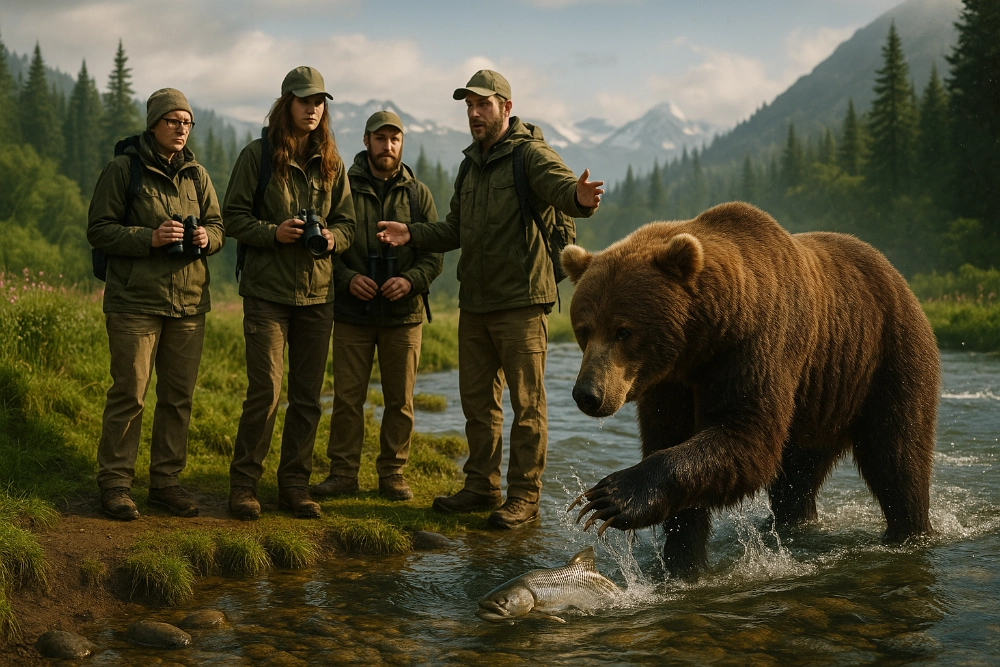
Better Bear Viewing in Open Wilderness
The first reason small groups matter is simple. Viewing improves.
In wide open coastal areas like Chinitna Bay, guests stand on tidal flats or meadow edges. Bears may be grazing, fishing, or walking the shoreline. When a group is small, everyone has space to see clearly.
Small groups allow:
• Clear sightlines
• Easier photography
• Faster movement if bears change direction
• Less noise
Large groups take longer to reposition. They create more movement and sound. In wildlife settings, even small changes in noise can shift animal behavior. With fewer people, guides can move the group quietly and adjust position without delay. This keeps viewing smooth and focused.
The goal is not just to see a bear. The goal is to watch natural behavior unfold.
Safer Positioning Around Wild Bears
Safety is a major reason small group tours are preferred.
Brown bears in Alaska are wild animals. They are not trained or conditioned for crowds. Guides must monitor every guest at all times.
With a smaller group, the guide can:
• Keep everyone within sight
• Give clear instructions
• Maintain proper distance
• Respond quickly if a bear shifts direction
There is a common saying in wildlife safety that organized groups appear less vulnerable than scattered individuals. However, large commercial groups can still create confusion if people are not coordinated.
In a small group, spacing stays consistent. Communication stays direct. Everyone hears instructions clearly.
This level of control is important when viewing bears in open wilderness terrain.
Less Environmental Impact on the Landscape
Alaska’s national park lands are protected for a reason. They are fragile ecosystems shaped by tides, salmon, and seasonal growth.
Smaller groups help limit environmental impact. Fewer people walking across tidal flats means:
Less disturbance to vegetation
Reduced erosion
Minimal trail formation
Lower noise levels near feeding areas
In places like Lake Clark National Park, maintaining natural bear behavior is critical. If too many visitors crowd a shoreline, bears may shift their movement patterns. Small groups reduce pressure on the environment. They allow wildlife to remain relaxed and predictable. Sustainable travel is not optional in Alaska. It is necessary to protect long-term access.
A More Personal Experience With Your Guide
Small group tours create a more personal trip.
In a group of six, guests can ask questions freely. Guides can explain:
• Bear feeding patterns
• Salmon migration
• Tide cycles
• Coastal ecosystems
This creates a stronger educational experience.
Large wildlife tours often limit interaction. With too many guests, conversation becomes difficult. Questions go unanswered. Movement becomes slow. In a small group, guests stay engaged. The guide can adjust pace based on interest and comfort level. Some guests focus on photography. Others want to learn about conservation. A small group allows flexibility. That flexibility shapes the entire day.
Quieter Conditions Keep Bears Calm
Wildlife viewing improves when animals feel calm.
Bears that feel crowded may change direction or leave an area. When groups are small and quiet, bears often continue feeding naturally.
In Chinitna Bay, bears graze on sedge grass and dig for clams in tidal flats. During salmon season, they fish along streams. Calm viewing conditions allow guests to watch these behaviors without interruption.
Small groups move slowly and deliberately. There is less shifting and less background noise.
This increases the chance of seeing:
• Mothers with cubs
• Multiple bears feeding at once
• Natural interactions between adult bears
Wildlife behavior drives the experience. Small groups help preserve that natural rhythm.
Smaller Group Tours with Alaska Bear Viewing Tours
Our tours depart by boat from Homer or Anchor Point. The 32-foot offshore vessel is designed for comfort and safety, not for large crowds.
Limiting the number of guests ensures:
• Balanced weight distribution
• Smooth loading and unloading
• Efficient shoreline access
• More room on deck during transit
When the boat lands along the coast, a smaller group can step off quickly and organize without delay. Less waiting means more time actively viewing bears. Rather than filling every seat possible, we prioritize quality time on bear tours over volume.
Choosing the Right Bear Tour for Your Trip
If you are comparing options, ask about group size before booking.
Small group tours often provide:
• Better visibility
• Stronger safety management
• More time with your guide
• Reduced environmental impact
• A quieter wildlife experience
Large group tours may appear convenient, but they can reduce flexibility and personal interaction.
In remote coastal Alaska, space matters. Calm movement matters. Clear communication matters. Our experienced team know how to design custom bear tours that work so well for people and for bears..
Experience Wildlife the Right Way
Alaska’s wilderness is powerful and unpredictable. Bears move based on food, tide, and season. Guides adjust positioning throughout the day to maintain safety and strong viewing conditions.
Smaller groups make this possible.
They protect the landscape.
They protect wildlife behavior.
They improve guest safety.
They create a more personal and memorable trip.
If you want a responsible and well-managed experience watching brown bears in Lake Clark National Park and Preserve, consider booking a small group tour with experienced local guides.
Contact our team to learn more about departure dates from Homer or Anchor Point and how small group travel enhances your time in Alaska’s wild coastal habitat.