

How Do Alaska Bear Viewing Tours Work?
If you are planning a trip and wondering how do Alaska bear viewing tours work, you are not alone. Many visitors want to know what happens from start to finish.
Bear viewing in Alaska is not a quick stop on the side of the road. It is a planned and guided experience. At Alaska Bear Viewing Tours, we take guests by boat to Chinitna Bay in Lake Clark National Park. This area is known for a high number of brown bears and wide open coastal land.
From the moment you arrive in Homer or Anchor Point to the time you return, every part of the day follows a clear plan. The goal is simple. Keep guests safe. Protect the bears. Create an unforgettable experience.
Crossing Cook Inlet by Boat
Our bear viewing tours begin by boat, not by plane. Guests meet in Homer or Anchor Point and board a fully enclosed 32-foot offshore boat operated by Captain Mike Patterson.
Before leaving the dock, we review:
• Safety rules
• Weather conditions
• Tides
• What to expect during the trip
The ride across Cook Inlet takes about two hours. This part of the trip is an adventure on its own. Guests often see whales, sea otters, seabirds, and sometimes even orcas.
On clear days, you can see volcanoes across the water. The scenery alone makes the boat ride worth it.
Boat access is a big part of how our Alaska bear viewing tours work. Chinitna Bay is only 38 miles from Anchor Point. That makes it a direct and scenic route into bear country. We limit each tour to six guests. Smaller groups mean more space, better views, and more time with your guide.
Arriving at Lake Clark National Park and Preserve
After crossing the inlet, we arrive at the remote shoreline of Lake Clark National Park and Preserve.
This is one of the best bear habitats in Alaska. Chinitna Bay is known for:
• Wide coastal meadows
• Tidal flats where bears dig for clams
• Salmon streams during peak season
• A strong population of brown bears
Biologists have counted over 200 bears in this coastal region. These are Alaska Peninsula brown bears, some of the largest in the world.
Unlike Brooks Falls in Katmai National Park, there are no viewing platforms here. Additionally, there are no crowds.
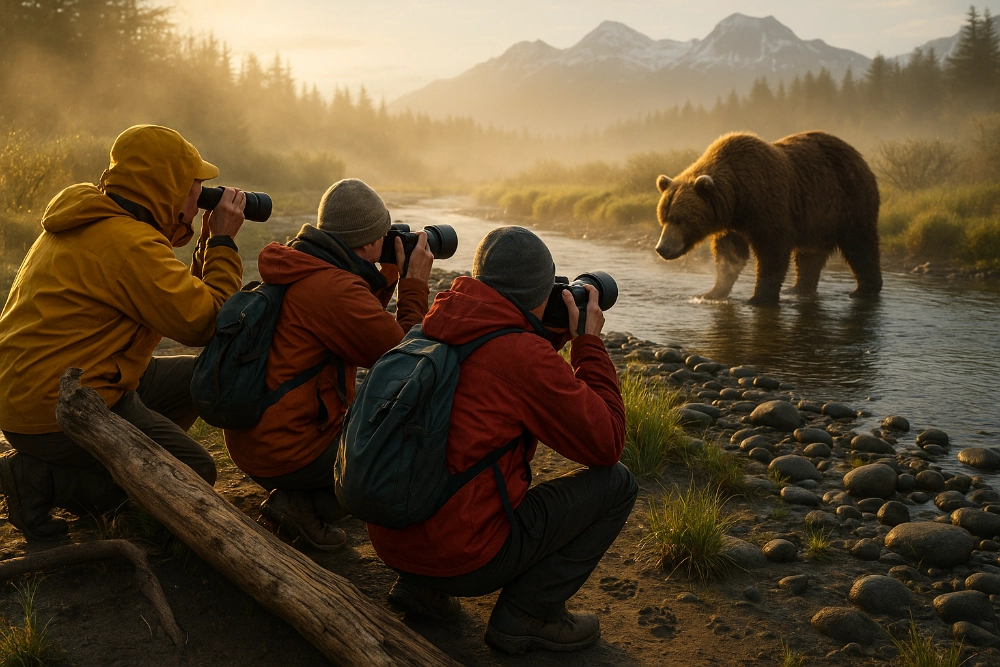
Instead, you walk natural ground with your bear guide. The land is open and easy to walk. Your guide checks the area before moving the group closer. Distance from the bears is always respected.
This hands-on approach is a core part of how bear viewing works in Lake Clark.
What Happens During the Guided Tour
Once we land, your guided tour continues on foot. Before walking, your guide explains:
• How to stand and move
• How far to stay from bears
• What to do if a bear changes direction
• How to take photos safely
Then the viewing begins.
Bear behavior changes through the season. In early summer, bears often graze on sedge grass. Later in the summer, they focus on salmon streams.
You may see:
• Bears fishing for salmon
• Mothers walking with cubs
• Large males near food sources
• Bears digging in tidal flats
Sometimes the group sits quietly and watches. Other times, the guide may move the group slowly to get a better view.
Bear viewing is not rushed. The goal is to watch natural behavior without interrupting it.
This mix of patience and careful movement offers the best Alaska bear viewing in open wilderness areas.
The Best Time to See Bears
Timing matters when planning your trip.
Most bears come out of their dens in mid-April or early May. In spring and early summer, they feed on grasses and anything they can find along the coast.
From mid-July through early September, salmon runs begin. This is when bear activity increases. Bears gather along streams to catch fish.
During peak season, it is common to see 12 to 40 bears in a single day.
Wildlife is never guaranteed. Bears are wild animals. But Lake Clark and Chinitna Bay are known for high sighting rates during the summer months.
Long summer daylight also helps. Alaska’s extended daylight hours give guests more time to watch and take photos.
If you are searching for affordable bear viewing Alaska options, early and late season trips may offer good opportunities with fewer visitors.
Safety and Why Guided Tours Matter
Safety comes first on every bear viewing tour.
Lake Clark National Park is protected land. While there are no platforms like Brooks Falls in Katmai, the rules are still strict. Here is what keeps guests safe:
• Small groups
• Professional guide supervision
• Clear distance from bears
• Tide and terrain awareness
• Emergency communication tools
Captain Mike Patterson has decades of experience in Cook Inlet and along this coastline. He understands the tides, the weather, and bear behavior.
Visitors often ask about the odds of seeing bears in Alaska. In top areas like Lake Clark, Katmai National Park, Pack Creek, or Kodiak Island, sightings are common during peak months. Still, these animals are wild and free.
Respecting their space helps keep both people and bears safe.
How Our Tours Compare to Katmai or Kodiak Island
When people research Alaska bear viewing tours, they often read about Katmai National Park, Brooks Falls, or Kodiak Island.
Those areas are popular for a reason. Katmai is famous for salmon fishing. Kodiak Island is known for very large bears and rugged landscapes.
Many of those tours require flights. Some use raised viewing platforms.
Our tours in Lake Clark are different. We travel by boat instead of plane. We walk open coastal land instead of standing on platforms. We keep groups small and personal.
Each area offers a unique experience. Katmai focuses on waterfalls and salmon runs. Kodiak offers remote island terrain. Lake Clark provides wide open coastal viewing with strong bear numbers and fewer built structures.
Knowing the differences helps you choose the right location for your trip.
From Start to Finish
So, how do Alaska bear viewing tours work?
You meet your guide in Homer or Anchor Point. You cross Cook Inlet by boat. You land in Lake Clark National Park and Preserve. You receive safety guidance. Then you begin your guided tour on foot.
You watch brown bears in their natural habitat while experienced professionals manage positioning and safety.
After several hours of viewing, you return by boat across the inlet.
The process is organized, but the experience feels wild and real. It allows you to see Alaska’s bears without disturbing their world.
If you are ready to experience Alaska bear viewing by boat in one of the most productive coastal habitats in the state, contact our team to learn more about available dates and seasonal timing.
Small groups fill quickly during peak season. Plan ahead and prepare for a true Alaska wilderness adventure.
Secure your spot today and prepare for an unforgettable journey into Alaska’s wilderness, where brown bears roam freely and every viewing moment tells a story.